



Much of LA’s Immigrant Community is Hiding, Leaving a Hole in the Fabric of the City 🏙️🧵
Los Angeles—a city known for its sunshine, cinema, and sprawling boulevards—contains an intricate mosaic woven with cultural threads from all over the globe. Yet, ironically, as visible as these cultural influences are, much of its vibrant immigrant community remains intentionally invisible, opting for the shadows. The result is a curious paradox: a city abounding in cultural diversity, yet missing the voices that should naturally accompany it. The quiet absence of these communities leaves not just a silence, but a startling void in the city’s otherwise elaborate tapestry. 🧩
The Quiet Contributors to the Economy
Despite the challenges, immigrants play a vital role in Los Angeles’ economy, much like a river beneath the ice that sustains life unseen. The economic contributions are undeniably significant, accounting for more than a third of the city’s labor force. Industries such as agriculture, construction, and hospitality lean heavily on this labor, in a dynamic that mirrors the contradictory forces of dependency and denial. The $232 billion contribution from immigrant-led households in income, tax, and spending speaks volumes, yet does the city listen? Isn’t it ironic that the lifeblood of the city’s economy is so often overlooked or undervalued?
- Employment: Immigrants comprise about 53% of the agricultural workforce, proving indispensable despite tight immigration debates.
- Tax Contributions: In 2019, immigrant-led households in Los Angeles paid nearly $8.5 billion in federal taxes and $4.4 billion in state and local taxes.
- Consumer Spending: The purchasing power of immigrant households stands at approximately $45 billion, fueling various sectors from fashion to tech.
The Cultural Quilt Woven by Stealthy Weavers
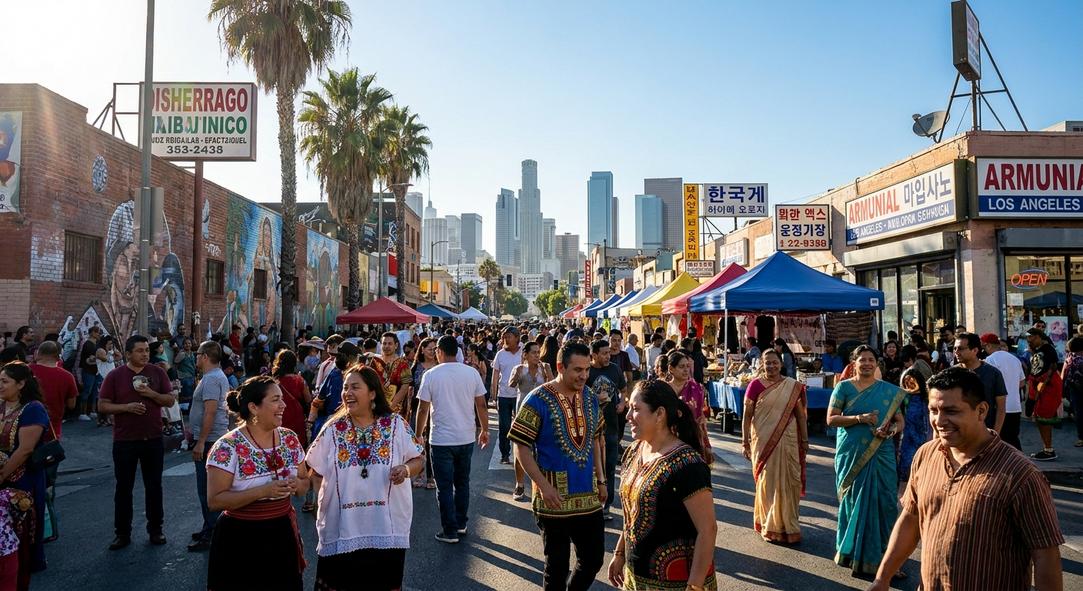
Census numbers may paint a simplistic picture, but it is the diversity of cultures that truly enshrines L.A.’s reputation as a global city. From the bustling markets of Little Bangladesh to the fervent celebrations in Koreatown, Los Angeles is a patchwork of neighborhoods teeming with traditions that span continents. This juxtaposition of lively cultural expression and prudent secrecy renders the community’s richness both its beacon and its cloak. It elicits a question: How does a city celebrate a culture while its bearers remain hidden?
Data reveals that Los Angeles houses over 185 different countries and boasts more than 220 languages spoken—a complexity that turns the metropolis into one of the world’s most linguistically diverse cities.
Yet, the very multitudes of voices—like a symphony without a conductor—remain stifled, as various systemic and social barriers compel many to stay in the shadows. Language barriers, fear of deportation, and limited access to resources such as healthcare and education keep them hidden. These issues are persistent, reminiscent of recurring storm clouds that periodically darken an otherwise sunlit sky.
A Community in Hiding
The complexities of the immigration system create an atmosphere that inspires both hope and apprehension. Fear of raids, deportation, and separation emerges as a dark undertone, reminiscent of whispers in the wind. As heated rhetoric against immigrants builds, it’s as if the city is caught in a societal paradox—touting diversity yet fostering exclusion. Is it any wonder, then, that many prefer the safety of anonymity over the risk of disclosure?
To navigate these uncertainties, immigrant communities often turn to tight-knit social networks, creating an invisible backbone of mutual support reminiscent of the close bond between barnacles and the tide.
Beyond Hidden: Towards Community Integration
The push for integration, conversely, promises richer social fabric and slower strides toward genuine inclusion. Community organizations and local leaders have taken steps to weave together these disparate threads into a more unified whole. Education initiatives, legal assistance, and legislative advocacy aim to illuminate the pathways to belonging.
For example, initiatives led by organizations such as the Coalition for Humane Immigrant Rights (CHIRLA) focus on advancing the civic and legal standing of immigrants, equipping them with the tools for both protection and empowerment.
However, the road to full integration remains fraught with challenges as entrenched as the roots beneath an old oak tree. The sense of belonging, ultimately, is not just about being seen but about being heard. It’s a tapestry that requires both visibility in participation and resonance in law.
In crafting solutions, perhaps we might ask: How are we shaping our city? Will the silence continue to echo within the bustling streets, or can Los Angeles become a city where every thread is not only visible but cherished? The answer might just lie in whether we choose to acknowledge the unseen or continue to walk unwittingly past it. 🫂✨