





Trump’s Climate Health Rollback: A Storm Brewing on Poor and Minority Communities🌪️🩺
Amid swirling political fervor and smoke stacks relentlessly puffing like oblivious dragons, a decision was made: roll back environmental safeguards that shield the air we breathe. Ironically, this deregulation arrives cloaked in promises of economic salvation—a sacred cow for some—but the invisible price tag is a bill paid in the currency of poor and minority communities’ health. Who will stand under the grey skies when the wind stops carrying warnings?
The irony hits hard: policy crafted to “ignite prosperity” smolders as it fans the flames of environmental injustice. The very neighborhoods historically painted as afterthoughts in America’s industrial tapestry now bear the brunt of these regulatory retreats. Experts caution, and evidence mounts, that this rollback will carve new fissures on the fault lines of race, wealth, and health.
The Disproportionate Fallout: How Climate Rollbacks Are a Silent Pandemic ⚖️
At first glance, rolling back pollution controls might appear as a fuss over arcane legal language or a mere matter of bureaucratic churning. But the air around this issue is thick with invisible particles of injustice. Environmental health experts remind us that air pollution does not mix evenly: it settles like an unjust snowstorm over communities already vulnerable.
It’s a striking antithesis: in an era when scientific consensus sounds like a well-tuned orchestra warning us about climate chaos, policies move in the opposite direction. We have evidence that stricter standards saved thousands of lives per year, yet deregulation marches on—a march in reverse, down a path lined with environmental injustice and health disparities.
Communities at the Crossroads: The Unequal Burden of Breathing 🌫️🧑🏿🤝🧑🏻
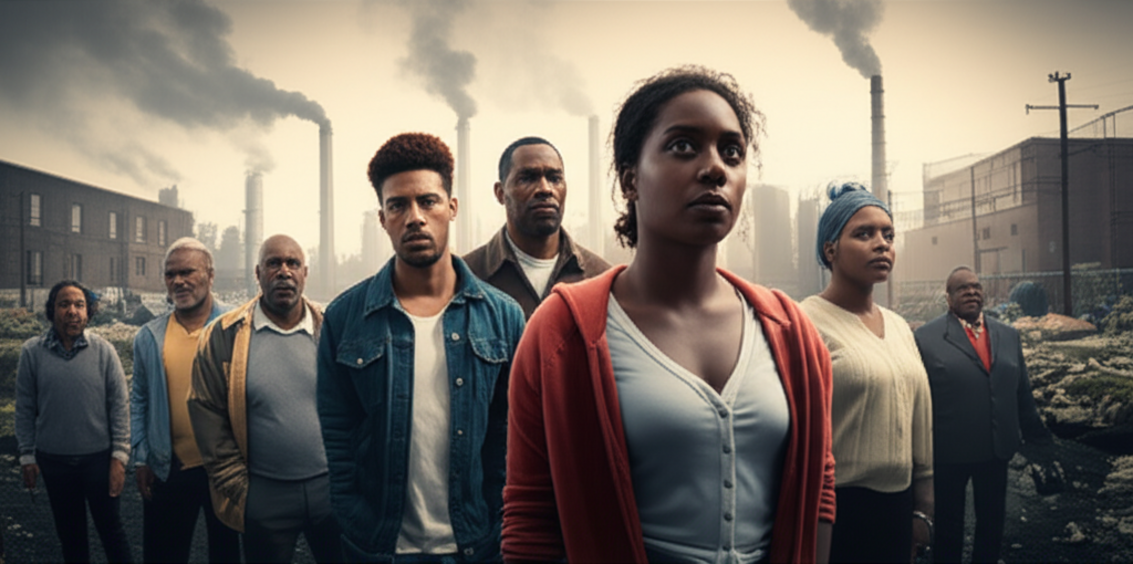
Take Camden, New Jersey—where bricks of pollution stack higher than hopes for cleaner air—or the smog-choked streets of Houston’s historically Black neighborhoods. Here, breathing is less a passive act and more a daily negotiation with invisible toxins. These places exemplify a paradoxical pattern: they produce little of the country’s wealth but inherit the dirtiest air.
Histories of discriminatory zoning, redlining, and underinvestment have relegated these neighborhoods beside refineries, factories, and highway corridors. The rollback of the Clean Power Plan and other regulations under the previous administration has been described by environmental justice advocates as “adding insult to injury”—a policy sledgehammer where targeted repairs are desperately needed.
“Environmental policy is often the quiet but relentless voice of discrimination,” says Dr. Marisa Figueroa, a public health researcher at the University of California. “When regulations slide backward, the communities least responsible for pollution inherit its heaviest costs.”
It is a stark reminder that climate policy is not just about carbon metrics or economic forecasts; it’s about the right to breathe clean air—a right still unattainable for millions due to systemic failures.
A Nation Divided: Prosperity or Poison? 💸 vs. 💨
Interestingly, this collision of values resurrects the oldest debate at the heart of environmental policy: growth versus guardianship. Trump’s approach, framed as unleashing economic engines silenced by regulation, echoes a 20th-century industrial gospel. Yet modern science and human stories advocate for another gospel—one that equates prosperity with sustainability and health.
Here lies the bitter irony.
While deregulation may provide short-term relief for industrial interests and rhetoric, the long-term societal costs spiral like a tornado, devastating the least equipped to recover. It’s a cruel reminder that progress distributed like smog is no progress at all.
The health toll is not an abstract future scenario. Studies link increased pollution levels directly with higher rates of hospitalizations and deaths due to respiratory and cardiovascular conditions in vulnerable populations—facts too uncomfortable to ignore.
Policy by Numbers: The Data Behind the Drift
- EPA’s own analysis estimated under the Obama-era Clean Power Plan that it would prevent up to 4,500 premature deaths annually by reducing coal plant emissions.
- Post-rollback projections suggest a rise in nitrogen oxide (NOx) and sulfur dioxide (SO2) emissions, both contributors to smog and acid rain.
- Children in poor urban neighborhoods show significantly higher asthma rates—sometimes double those in affluent suburbs.
- Communities of color face disproportionate exposure to airborne toxins, which intertwine with existing disparities in access to healthcare and economic opportunity.
The rollback does not merely erase protections; it amplifies these numbers quietly and relentlessly.
Looking Beyond the Horizon: Hope, Resistance, and the Unseen Fight
Yet, even as these policies threaten to darken and sicken the air over marginalized communities, a different kind of resistance rises. Grassroots organizations, local governments, and some states have vowed to uphold or even strengthen their own protections. In California, New York, and Massachusetts, new regulations are setting an antithetical tone—showing that policy can be a beacon, not just a blight.
Anecdotally, in Detroit’s neighborhoods, community groups have transformed abandoned lots into “green lungs,” planting trees that act as natural pollution filters—a small but potent simile for resilience, showing how nature and human spirit together can push back against environmental neglect.
Could the rollback mark a temporary eclipse rather than a permanent night? Or will history judge this period as one when political expediency clouded the collective conscience? Only time, and relentless civic engagement, will tell.
Along these lines, one is reminded that the air we pollute today is the breath our children inherit tomorrow. When policy clouds our skies, it also clouds our moral horizon. Perhaps the most urgent question is not whether the economy or environment wins, but whether we can refuse to let the vulnerable lose.
As the planet’s climate intensifies its fury and the health of our nation teeters, rolling back safeguards does not just regress science and policy—it deepens injustice’s shadow on the very lungs of America’s most fragile communities. Is this the legacy we want to enqueue in history’s ledger? 🌍🚨