



Amazon Distribution Center at LAX Sells for Record Price 📦🛫
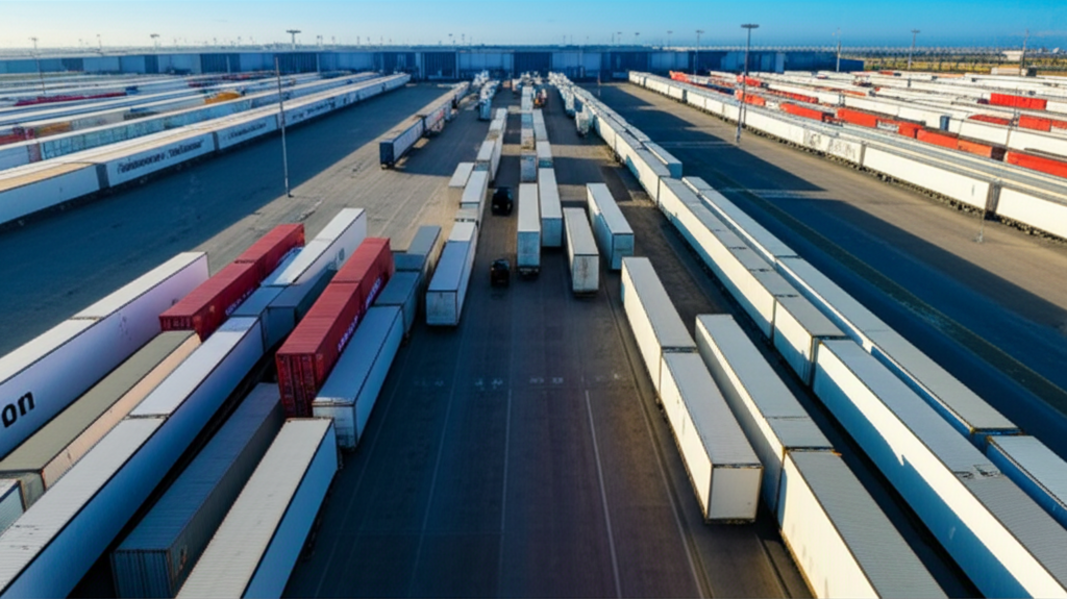
When Amazon’s sprawling distribution center near Los Angeles International Airport changed hands for a jaw-dropping sum recently, the news bulletins trumpeted a new high-water mark for industrial real estate in Southern California. A gleaming fortress of logistics, sprawling more acres than some small towns, it sold for an amount that seems almost absurd in its scale — a price tag that is both a monument to e-commerce’s ascendancy and an ironic testament to the invisible costs of the quest for consumer convenience 💸.
But in a world addicted to instant gratification, where one-click orders rain from the digital clouds like manna, it’s worth pausing to ask: What does this record-breaking sale reveal about the paradox of our time? How can a warehouse, essentially a colossal box full of stuff, command a value soaring like a jumbo jet passing overhead just steps from the dusty tarmac? And, beneath the blinding gleam of capital transactions, what stories simmer quietly about the neighborhoods and people tethered to these megastructures?
The Explosion of Industrial Real Estate: A Tale of Two Worlds
In the post-pandemic era, industrial properties—especially distribution hubs near major ports and airports—have become the crown jewels of real estate portfolios. The Amazon center at LAX, purchased for north of $600 million, exemplifies this feverish demand, pushed skyward by the relentless surge of online shopping and logistical complexity.
Yet, the situation evokes an exquisite, almost Shakespearean antithesis: at the very moment America’s middle class is squeezed by inflation and economic uncertainty, vast fortunes amass around buildings whose chief purpose is to deliver the luxury of immediacy to those who can afford it. A gleaming monument of automated sorting and endless conveyor belts, the distribution hub stands as an emblem of disparity — a fortress that promises everything to shoppers yet reveals little of the human toil and the infrastructure stress behind it.
Behind this gleam lies something close to a modern gold rush, but with warehouses replacing saloons. Investment firms and REITs (Real Estate Investment Trusts) are scrambling to park their capital in properties with guaranteed cash flows from e-commerce giants. The Amazon LAX facility wasn’t merely purchased as a building — it was acquired as an insurance policy against the uncertainty of future consumption habits and the growing necessity for speed at all costs.
Zooming Out: The Geography of Consumption and Consequences
Consider, for a moment, the paradox of location. The center nestles adjacent to one of the busiest airports in the U.S., a place historically synonymous with jet engines roaring and the promise of distant horizons. Now, instead, it hums with forklifts and blinking warehouse robots — a symphony orchestrated not for exploration but for the shrink-wrapped immediacy of packages that must arrive tomorrow morning.
The irony here is as subtle as smog. Air quality in the LA basin has long been a contest between nature’s stubborn persistence and human intervention’s overreach. The relentless flurry of diesel trucks and cargo planes contributes not just to economic vibrancy but also to the very ailments choking the city’s lungs. It’s as if progress were a double-edged sword, slicing through both opportunity and environment with equal ferocity.
In legacy, the Amazon distribution hub can be seen as a modern industrial behemoth that has become a microcosm of global supply chain shifts. The transition from factories abroad to fulfillment centers close to customers represents a tectonic reorganisation. Yet, this proximity comes with trade-offs: heightened traffic congestion, noise pollution, and the fraying social fabric of local communities who bear the brunt of these invisible externalities.
More Than Concrete and Steel: The Human Equation
There’s a faint but persistent human story beneath these headlines. Workers at distribution centers often contend with grueling conditions—the essence of modern-day toil tucked behind squeaky clean online interfaces and fast-track delivery promises. There’s a biting irony here: while shareholders toast record sale prices, many on the warehouse floors endure precarious schedules and physical strain.
It’s reminiscent of a centuries-old paradox: the more connected the world becomes, the more remote the individual sometimes feels. In a system spinning at digital speed, where consumer attention spans flirt with nanoseconds, the lived experiences of laborers resemble shadows cast by the overwhelming architecture of logistics capitalism.
Oddly, this complexity echoes the unpredictability of weather patterns — turbulent fronts clashing without ceremony, rippling consequences far beyond the initial storm. The sale’s headline number—the record price—captures markets, but the local realities sketch a far grimmer draft beneath the gloss.
Looking Ahead: What’s the Real Cost of Convenience?
The LAX sale sets a new benchmark, sure, but it also raises unspoken questions about sustainability, equity, and urban planning for the 21st century. Can Southern California’s infrastructure absorb these ever-growing logistics titans? Will communities near such hubs share in the prosperity or only pay the cost in noise, pollution, and rising housing demand?
One might wonder whether the invisible hand of the market bends toward efficiency or accelerates inequality like a runaway freight train — unstoppable, powerful, but not always steering toward a just destination.
In the end, the Amazon distribution center near LAX is more than an industrial real estate headline; it’s a mirror reflecting our collective choices about commerce, environment, and human value. As this colossal artifact of globalization commands record prices, it invites a more profound exploration of what we prioritize and what, perhaps, we are willing to sacrifice on the altar of instant delivery and boundless consumer appetite ⚖️🚛.