






Justice Served: Man Sentenced in Notorious Murder of Bank Teller
In a harrowing chapter of local crime history, a man was sentenced to 30 years in prison for his role in the notorious murder of a bank teller, a crime that sent shockwaves through the community and raised countless questions about safety in everyday life. The case, emblematic of the darker side of greed and desperation, has finally reached a resolution, yet the scars it left behind remain evident.
On that fateful day three years ago, the life of 28-year-old bank teller Emily Torres was cruelly cut short during a brazen robbery at the downtown branch of First National Bank. Eyewitnesses described a scene of chaos as masked assailants stormed in, their demands merging with the screams of unsuspecting customers. In the turmoil, Emily was shot, her life extinguished in an instant, leaving behind a grieving family and a troubled community.
The Anatomy of a Crime
The investigation into Emily’s murder was both swift and thorough, drawing the attention of local and federal law enforcement agencies. Authorities combed through surveillance footage, collected evidence, and interviewed countless witnesses. After weeks of painstaking investigations, the police pieced together a chilling narrative of desperation and betrayal.
The convicted man, David Swanson, was described as a troubled individual struggling with addiction and financial woes. His involvement in the crime, motivated by a desperate need for cash, led him to recruit two associates who would eventually become key witnesses against him in exchange for leniency in their own sentences. This intricate web of betrayal painted a broader picture of criminal complicity that spanned beyond a mere act of violence. 💔
Community Reaction and Decline of Safety
The sentence handed down in court was met with mixed feelings. For some, it signified a yearning for justice; for others, it underscored a poignant reality—this could happen to anyone. Local residents gathered outside the courthouse, holding signs that symbolized hope and a demand for community reform. “We need to ensure safety in our neighborhoods,” one demonstrator proclaimed, reflecting a shared sentiment among many. 🚧
Since the tragedy, the community has rallied, establishing programs aimed at crime prevention and mental health support, targeting the very roots of issues like addiction that can lead to such violence. According to a study by the National Institute of Justice, communities that engage in proactive public safety measures can see a reduction in crime rates by as much as 15% over five years. However, healing from such trauma requires more than structural changes; it necessitates emotional and psychological recovery.
The Legal Labyrinth
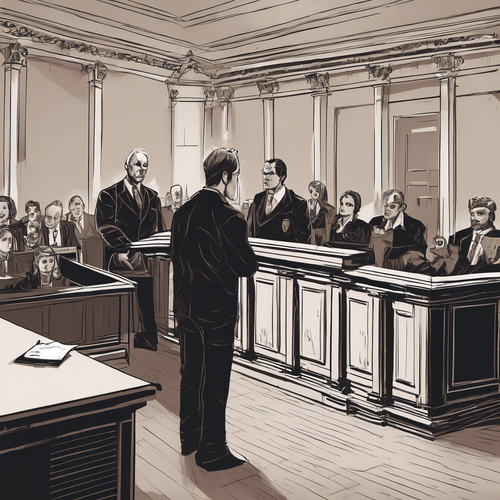
Throughout the trial, the courtroom became a theatre of tense revelations and emotional testimonies. Family members shared how Emily was not just a victim but a daughter, a sister, and a beloved friend. “She was the light in the room,” her mother recounted tearfully. The defense attempted to argue that Swanson was a product of his environment, preying on the jury’s empathies to mitigate his culpability. Ultimately, the jury was unmoved, finding the severity of his crime overwhelming. ⚖️
“This sentence is not just about punishing the offender; it’s about sending a message that our community will not tolerate such violence,” emphasized Judge Maria Gomez during the sentencing.
Lingering Questions and Impacts
As Swanson begins his lengthy sentence, critical questions remain unanswered. What conditions drive individuals to such desperate actions? How can communities better protect their most vulnerable members? The case remains a haunting reminder of the fragile intersection of crime and humanity.
Emily Torres’s story has become a poignant symbol of loss but also a rallying point for community action and change. Advocates are pushing for better funded mental health initiatives and community outreach programs aimed at preventative measures. “This isn’t just a story about a murder; it’s about reshaping our future,” remarked community leader Rachel Simmons.
While justice has been served in the courtroom, the battle for safety continues out on the streets, a reminder that every life lost carries with it an irreplaceable void and a compelling reason to strive for change. 🌟




Do you think the sentencing was fair, or should the punishment have been harsher? Lets discuss the legal systems complexities!
Do you think the sentencing was fair, or should the punishment have been more severe? Lets discuss! #JusticeServed or #NotEnoughPunishment?
Do you think the sentencing was too lenient or just right? I feel torn on whether justice was truly served.
Justice was served. The sentencing was fair. Move on.
Do you think the sentencing was fair or too lenient? Im curious to hear different perspectives on this notorious case.
Do you think the sentencing was fair, or should there have been a harsher punishment for the bank teller murder? Lets discuss!
Do you think the sentencing was fair or too lenient? I cant decide! The legal system is a maze.