



California’s Bold Move to Curb Social Media Addiction in Kids 📵👦👧
In a world where the virtual realm often feels more real than reality itself, California’s latest legislative act shines like a lighthouse amid a digital storm. The state has passed a groundbreaking bill banning addictive social media features for users under 18. Like a fierce wave, this new restriction has its intriguing roots in Long Beach, a city whose name now echoes beyond sun-drenched coastlines for its role in safeguarding youth.
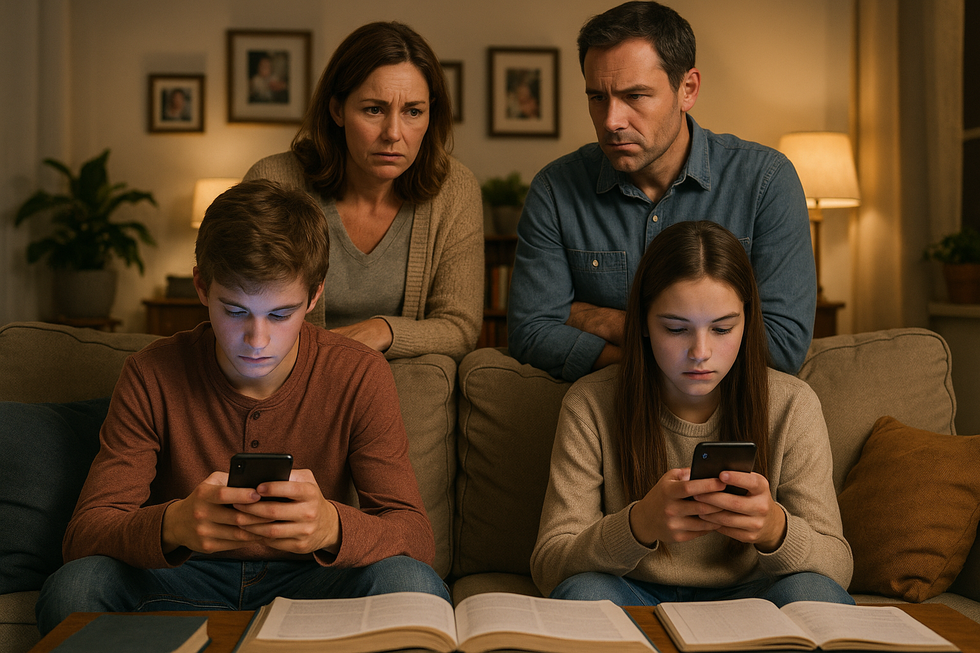
The digital age, once lauded for limitless connectivity, has pulled a rather peculiar rabbit out of its hat—a seeming paradox where the more we connect, the more isolated our young ones become.📱 Is it then ironic that platforms designed to bring us closer now require legislative handcuffs to keep the users they bind in check? The pressing question isn’t just what kids can do online, but what they’re programmed to; ensnared by expertly crafted algorithms like bees to a honey-laden trap.
The Origins in Long Beach: A Local Catalyst for Change
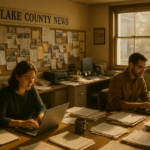
Long Beach, a community known for its progressive stance and a skyline as diverse as its inhabitants, planted the seed for this legislation. It began with local educator Dr. Aria Chang, who observed her student’s engagement with their phones as more hypnotic than her lessons. Her insights led to a city-wide study revealing the seemingly innocuous nature of screen time morphing into a psychological web as sticky as a spider’s silk.
Chang’s advocacy transformed her observations into action, igniting a local movement that crested at the state capitol—a telling reminder that significant change often germinates from the everyday concerns of ordinary but observant citizens. Like a pebble creating ripples in a pond, Long Beach’s efforts are symbolic of grassroots democracy in motion.
Antithetical Times: The Digital-Social Dilemma
In a society that champions digital freedom, the notion of imposing restrictions seems counterintuitive. Yet, the very platforms that were hailed as conduits of free expression and personal empowerment have turned a corner, morphing into what Pete Doherty might describe as, “cages of infinite size.” Can we, in good conscience, allow our growing minds to be shaped by digital hands whose primary intent is not to educate or enlighten, but to engender perpetual engagement?
Some argue that this legislation stifles technological advancement, positing that it is a mere Band-Aid on a festering wound—one that requires more profound introspection and societal change. Yet, others laud it as a necessary boundary, much like grounding a child for their own good. As a tree reflects the ground it grows from, perhaps the health of our digital age will reflect the societies that temper its use with thoughtful restraint.
Similes of Understanding: The Internet as an Ocean
Imagine the internet as an ocean: vast, rich in unexplored wonders, yet treacherous with undertows and hidden dangers. Social media, in this analogy, is the siren song—mesmerizing yet perilous for young sailors without a seasoned captain. The California bill aims not to silence this song but to provide the next generation with navigational charts and a compass to steer clear of the rocks.
A Rallying Call or a Censor’s Hammer? 🔨
With this new law, California joins a global chorus calling for deeper scrutiny of our children’s digital diet. It beckons us to rethink our relationship with technology—are we the masters, or have we become the marionettes in a play scripted by invisible hands, with strings woven by lines of code?
As other states watch this legislative experiment unfold, we are reminded of a simple truth: it takes a village to raise a child, but only a click to lose them in digital tides. Thus, legislation alone cannot replace the watchful eye of a nurturing community. Perhaps, then, the real challenge lies not only in protecting our youth from addictive codes but in revitalizing the human connections that codes cannot replicate. Only time will teach what lessons this well-intentioned law imparts, and whether those learnings will craft a future more human than digital.