






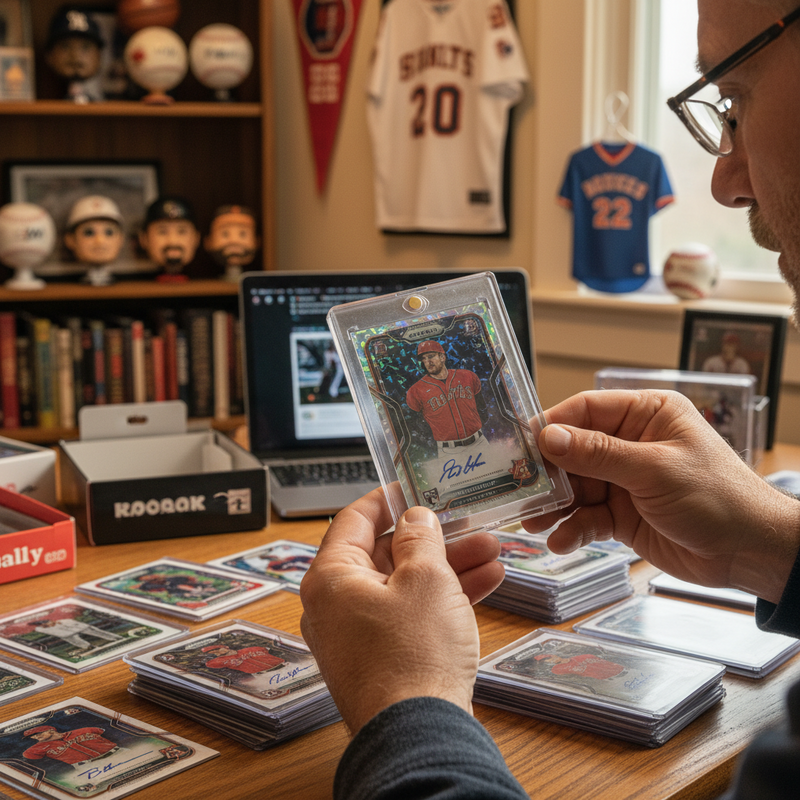
“Like hitting a lotto ticket.” Why sports memorabilia collectors pursue chase cards 🃏🏆
Chase cards—the shimmering unicorns of the sports collectible world—are often described as “like hitting a lotto ticket.” And maybe that’s not far from the truth, except the lottery encourages indifference to odds. Chase cards entice collectors to swim against a torrent of mass production and mainstream nostalgia, chasing the rarest threads in a web of glossy cardboard. But what exactly fuels this relentless pursuit? Why does one fragment of autographed cardstock hold the power to ignite decades of loyalty, envy, and sometimes irrational exuberance?
Rarity and the Siren Song of Rarity’s Opposite
The irony is delicious: chase cards are produced in limited quantities, yet they surface within packs brimming with masses of the mundane. Their existence is a secret handshake, a whispered promise that in this mountain of mundane clichés lies a precious gem—something that makes the rest less interesting. Like a rare comet blazing across a sky full of stars, the chase card commands attention precisely because it is so infrequent. They are the antithesis of the typical, of the easy-to-find player portraits that flood the market. The chase card plays on a collector’s deepest love for the exclusive, the scarce, the almost unattainable.
In contrast to the cheap thrill of mass-produced cards, a chase card holds you hostage to the paradox of value: it’s just paper—yet its worth can rival a season ticket, a high-end jersey, or in some cases, a small used car. The chase card stands at a crossroad where sentiment meets commodity.
The Alchemy of Fantasy and Investment
Collectors of chase cards often dwell in two worlds simultaneously: the pure idealism of fandom and the cold calculus of investment. The card in question is a totem, a physical talisman through which hopes for a player’s glory, or one’s own savvy, are projected. A rookie card of a future Hall of Famer? That’s a lottery ticket with blessed odds. The card’s visual appeal — holographic flourishes, limited-edition serial numbers, embossed signatures — is the magician’s smoke, obscuring the fact that the true prize is not what you hold but what you dream it to become.
Some chase cards are akin to fleeting shooting stars—once the player fades or scandals strike, the value can plummet as quickly as it soared. Others turn the tide for collectors, appreciating steadily like a fine wine aged in a hidden cellar. It’s this volatility—this high-wire tightrope walk—that draws many into the chase.
The Community and the Chase: A Story Beyond Cards
Digressing momentarily: at my nephew’s eighth birthday party, a card game erupted among cousins—and, while they were far from vintage chase cards, I saw the spark: competition, camaraderie, secrets exchanged in hushed tones. Similarly, collectors pursue chase cards not merely for ownership but for the communal thrill of the hunt. The chase spurs connections across decades and demographics, linking someone painstakingly searching a dusty hobby shop in small-town Ohio with an obsessive scroller in Tokyo hunting on an app at midnight.
This treasure hunt evokes ancient quests — the punkish thrill of rebellion against the mundanity of everyday life, a tiny rebellion against time itself. Those who chase cards forge identities, a blend of investor, archivist, fan, and historian, all wrapped into one. They become curators of moments frozen in the shimmer of print, exalting ephemeral glory bracketing the human condition itself.
Chase Cards in the Digital Era: A High-Stakes Paradox
Perhaps the greatest irony in chasing chase cards today is how their physical rarity is fought over in a world that trades increasingly in pixels and bytes. Blockchain and NFTs promise digital scarcity, yet the touch, the weight, the rustle of an actual card still holds souls captive. The parallel worlds exhibit a striking antithesis: one ephemeral and infinite, the other tangible and heartbreakingly limited.
And even as big-name companies flood the market with “chase” variants designed to boost box sales, the diligent collector navigates a labyrinth of authenticity, grading, and provenance. For these aficionados, the chase transcends materialism and becomes an intricate, human dance of trust and desire.
Why Chase Cards Matter: More Than the Price Tag
So is it all just a gamble? Surely some chase cards end up as dusty relics, forgotten in shoeboxes or basement piles. Yet, more often, the chase is less about the cards themselves and more about what they represent: hope, passion, mastery, and a subtle rebellion against impermanence.
Owning a chase card is like clutching a frozen page from a sports saga, a moment that defies time’s relentless march. It’s a beacon for the collector’s restless spirit, an emblem of control in an unpredictable world. Something that slaps you with the cold slap of reality yet invites you to dream wildly. Like hitting a lotto ticket, yes—but not one bought with currency alone; it’s bought with patience, obsession, and a touch of madness. 🔥
And when that elusive chase card finally surfaces—whether pulled from a pack, traded in a dim-lit convention hall, or unearthed on an online auction—it’s not just the card changing hands; it’s the passing of a torch, a brief triumph over chance itself.